Mostrando entradas con la etiqueta reinier wels. Mostrar todas las entradas

domingo, 13 de octubre de 2013

Old versiones/Versiones antiguas: 1958 - "Avenger" Darcy :) Darcy "Vengador"

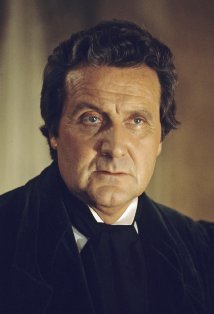
Finalmente, hoy podemos poneros estas imágenes que nos mandó Reinier Wels hace ya tiempo (sentimos el retraso). En ella, podéis ver al "Vengador" Patrick Macnee, como Mr Darcy para esta producción de la TV canadiense de 1958. Aunque no podemos ver esta versión, podemos disfrutar de las imágenes. Gracias Reinier :)

Para saber más de esta versión, leed el mangífico artículo de Reinier de hace unos meses para este blog: 

________________

Finally, today we can put you sent us these images have long Reinier Wels (Sorry the delay). In it, you can see the "Avenger" Patrick Macnee as Mr Darcy for this Canadian TV production 1958. Although we can not see this version, we can enjoy the images. Reinier Thanks :)
To learn more about this release, read the article by Reinier mangífico few months ago on this blog: http://prideandprejudice200years.blogspot.com.es/2013/01/pride-prejudice-in-black-white-first.html

01. Jane (Jill Showell), Mr. Bennet (Tony Van Bridge), Lydia (Pat Farmer), Mrs. Bennet (Marjorie Leete), Elizabeth (Kay Hawtrey)
02. Mrs. Bennet, Lydia
 
03. Mr. Bingley (Alwynne Whatsley), Elizabeth, Jane
 
04. Mr. Darcy (Patrick MacNee), Mrs. Bennet, Mr. Bingley, Lydia, Jane, Elizabeth
  
 
05. Mr. Darcy, Miss Bingley (Ann Morrish)


06. Mr. Collins (Ivor Barry), Mrs. Bennet, Lydia, Elizabeth, Mr. Bennet, Jane

07. Colonel Forster (Vernon Chapman), Mr. Wickham (Timothy Findley), Miss Bingley, Mr. Darcy
 
08. Miss Bingley (background), Elizabeth, Mr. Darcy
 
09. Miss Bingley, Elizabeth
 
11. Elizabeth, Mr. Collins
 
12. Elizabeth, Jane
 
13. Lydia, Charlotte (Diana Maddox), Mr. Bennet
 
14. Mrs. Bennet, Elizabeth
 
15. Lady Catherine de Bourgh (Margot Christie), Elizabeth
 
16. Lady Catherine de Bourgh
 
17. Mr. Bingley, Elizabeth, Mr. Bennet (background), Jane
 
 
18. Elizabeth, Mr. Darcy

domingo, 23 de junio de 2013

Adaptaciones de TV: De vier dochters Bennet: Orgullo y Prejuicio en Holanda – Reinier Wels

If you want to read the article in English, click here.

Reinier Wels, que como bien sabéis, ha colaborado con un fantástico artículo y buscando geniales fotos de adaptaciones antiguas, nos envía esta completa entrada sobre la versión de Holanda de los 50 de Orgullo y Prejuicicio, llamada "De Vier Dochters Bennet" (Las Cuatro Hijas Bennet).

 _______________________________


En una entrada anterior hablamos de todas las adaptaciones de la BBC de Orgullo y Prejuicio que están ahora perdidas. Sin embargo, lo que no dijimos es que había también dos series más de televisión, una italiana de 1957 y otra  de Holanda. (También hubo una española, pero está perdida). La serie holandesa tenía  6 episodios de 45 minutos cada uno, y se estrenó en TV el 4 de noviembre de 1961 hasta el 24 de marzo de 1962, con tiempo de un mes entre cada capítulo.


Similitudes y diferencias


El título, “De vier dochters Bennet”, significa “Las cuatro hijas Bennet”. Cuatro, porque aquí no existe Kitty (la versión de la BBC de 1967, por otro lado, elimina a Mary). En general, la historia progresa como esperaríamos, y los personajes tienen la misma historia, las mismas actitudes y las mismas relaciones entre ellos. Incluso sin subtítulos, no será difícil reconocer al señor y la señora Bennet por su forma de hablar. Sus nombre y la historia no fueron 'nacionalizados', si no que seguía ocurriendo en Inglaterra. Todas las escenas y frases familiares de la historia se traducen con mayor o menor fidelidad.


Sin embargo, hay también algunas diferencias. Aparte de unas escenas añadidas, incluyendo un chiste tonto sobre alubias francesas (o en  cadena), vemos las negociaciones entre Darcy y Wickham, que se resumen en cuanto dinero puede sacar de Darcy. El diálogo en la serie es más directo que al que estaríamos acostumbrados. No estoy seguro de si esto es porque son los años sesenta (la versión de 1967 de la BBC también muestra una Lizzy más ruda de lo que esperaríamos de ella), o porque los holandeses son generalmente menos sutiles y se andan menos por las ramas. Posiblemente, se puede culpar a ambas causas.


Traducción y producción

La traducción fue reailzada por Lo van Hensbergen, que era más activo como actor para la TV holandesa (en esta serie sólo aparece como guionista). Aunque las opiniones de Lizzy y otros son más francas y a veces más modernas que en el libro, algunas de las palabras holandesas utilizadas son antiguas, y no forman parte del lenguaje de hoy en día (por ejemplo “schimpscheuten” o burlas).

Como se mencionó en una entrada previa, la televisión inicial se hacía a menudo en vivo y así se hizo también "Las Cuatro Hijas". Una o dos veces, se puede detectar a alguien usando un nombre equivocado u olvidando una línea. A veces, los actores de reparto alargan la escena, sospecho que era la razón de esto era dar más tiempo a los actores principales para preparara la siguiente escena.


Los actores

Para la mayoría de los actores, estos eran sus primeros trabajos en TV. Frans ’t Hoen (Wickham) sin embargo, murió pocos años después. Lies Franken (Lizzie) ya había hecho unos cuantos papeles y haría ocho producciones más. Más conocido es Pieter Lutz (Collins), quizás el mejor actor del elenco, aquí en un papel secundario en su carrera, pero más tarde haría muchas series holandesas de TV, y que ha muerto recientemente (en 2009). Esas últimas cosas también se aplican a Ramses Shaffy (Darcy), aunque era mejor conocido como músico.


Viendo la serie

Hace algunos años la serie se repitió en un canal digital. Por eso, ahora las copias no son difíciles de encontrar como antiguamente lo fueron. Hay voluntarios trabajando ahora en los subtítulos en inglés. Esperamos que la hagan disponible durante el 2013, a tiemp para el 200 aniversario del libro.

TV adaptations: De vier dochters Bennet: Pride & Prejudice in the Netherlands – Reinier Wels

Si quieres leer el artículo en español, pulsa aquí.

Reinier Wels, that as you well know, has collaborated with a wonderful article and looking for great old pictures, send us a full entry about the Dutch 50s version of Pride and Prejudice, called "De Vier Dochters Bennet" (The Four Bennet Daughters).

 _______________________________


A previous blog discussed all the BBC adaptations of Pride & Prejudice that are now lost. However, what we didn’t mention is that there are also two other TV series, one from Italy in 1957, and one from the Netherlands. (There also was a Spanish adaptation in 1 show, now lost.) The Dutch series had 6 episodes of 45 minutes each, and was on TV from the 4th of November 1961 to the 24th of March 1962, with generally about a month between each episode.


Similarities and differences


The title, “De vier dochters Bennet”, means “The four Bennet daughters”. Four, because there is no Kitty in this version (the BBC version from 1967, on the other hand, left out Mary). In general, the story progresses like we would expect, and the characters have the same history, the same attitudes, and the same relations to each other. Even without subtitles it will for example not be difficult to recognize Mr. and Mrs. Bennet by their mode of speech. Their names and the story itself have not been ‘nationalized’, but are still set in England. All the familiar scenes and sentences from the story have been translated more or less faithfully.


However, there also are some differences. Apart from a few extra scenes, including a silly joke about French (or string) beans, we get to see the negotiations between Darcy and Wickham, which boil down to how much money he can get out of Darcy. The talk in this series is more direct than what we’re used to. I’m not sure if this is because it’s the sixties (the 1967 BBC series also shows Lizzy more rude than we’d expect her), or because the Dutch are generally less subtle and don’t beat about the bush. Possibly both causes are to blame.


Translation and production

The translation was done by Lo van Hensbergen, who was more active as an actor on Dutch TV (this series appears to be his only writing credit). Although the opinions that Lizzie or others express are more frank and sometimes more modern than in the book, some of the words used in Dutch are old fashioned, and are now no longer part of the everyday language (e.g. “schimpscheuten” or gibes).

As mentioned in the earlier blog, early television was often done live, and this goes for “The four daughters” too. Once or twice you can spot someone using the wrong name or forgetting a line. Occasionally, some of the supporting actors carry on a scene for a bit longer, I suspect this was to give the lead roles time to prepare on the next set.


The actors

For most actors, this was one of their first parts on TV. Frans ’t Hoen (Wickham) however died a few years later. Lies Franken (Lizzie) had already had a handful of roles and would play in eight more productions. Better known is Pieter Lutz (Collins), perhaps the best actor of the cast, here only in the second role of his career, but who later played in many Dutch TV series, and who died only recently (in 2009). Those last two things also apply to for Ramses Shaffy (Darcy), although he is better known as a musician.


Watching the series

A few years ago the series has been repeated on a digital channel. Because of that, copies are now not so hard to find as they once were. Volunteers are currently working on English subtitles. We hope they will be available during 2013, in time for the book’s 200th birthday.

viernes, 7 de junio de 2013

sábado, 6 de abril de 2013

Fotos/Pics! 1952 version: Peter Cushing & Daphne Slater

Thanks to Reinier, as usual :) Gracias a Reinier, como siempre :)

Peter Cushing & Daphne Slater in 1952's BBC Version/en la versión del 52 de la BBC


Source/Fuente: old magazines/revistas antiguas

jueves, 28 de marzo de 2013

Fotos/Pics! 1958 version - versión de 1958


In the following video, thanks to Reinier Wels, who made a wonderful article about the adaptations of Pride and Prejudice some weeks ago (see link here), you can see images of the 1958 version with Patrick MacNee (The Avengers, A View to Kill...). It's fantastic!!! Thanks!!

En el siguiente video, gracias a Reinier Wels, wque hizo un maravilloso artículo sobre las adaptaciones de Orgullo y Prejuicio hace algunas semanas (el enlace está aquí), puedes ver imágenes de la versión de 1958 con Patrick MacNee (The Avengers, A View to Kill...). ¡Es fantástico! ¡Gracias!


jueves, 31 de enero de 2013

Changing the images: old versions / Cambiando las imágenes: versiones antiguas

Reinier Wels, autor de un maravilloso artículo sobre las adaptaciones antiguas de la novela, publicado hace poco, nos ha proporcionado un par de buenas imánges, pues se incluye una página de una revista con la programación de 1938 con Orgullo y Prejuicio. La hemos incluido en el artículo, que puedes disfrutar, y si aún no has leído, te recomendamos, aquí:


Reinier Wels, the writer of a wonderful articles about the old adaptations of the novel, which we published short time ago, has given us a couple of good images, because it includes the picture of tha TV magazine from 1938, where you can find Pride and Prejudice. We have updated this article, and you can enjoy it, and if you haven't already read it, here:

sábado, 26 de enero de 2013

Orgullo y Prejuicio en blanco y negro: Primeras y Últimas impresiones - Reinier Wels

English version here.

Artículo de Reinier Wels. Reinier es un historiador holandes y un gran admirador de Jane; nos conocimos debido a su pasión por el trabajo de Jane y las adaptaciones. Afortunadamente éste no será el último artículo escrito por él.


Para la mayoría de la gente Pride and Prejudice en la televisión comienza en 1995 o 1980, y antes sólo hubo una película en blanco y negro de 1940. Se podrían sorprender algo de la cantidad de adaptaciones de TV que ya se habían hecho, y tras eso, frustarse porque la mayoría no podrán verse de nuevo. Porque la mayoría no se grabaron jamás y otras se eliminaron. Así que cuando estuvieron en televisión, fueron un ejemplo de Primeras y Últimas Impresiones. La mayoría fueron hechas por la BBC pero también hubo versiones de TV en Norteamérica, Italia, Holanda y España. Centrémonos de momento en las versiones en inglés. Es una historia de muchas versiones perdidas.


Versión de los 50


La primera vez que Orgullo y Prejuicio apareció en TV fue tan pronto como en 1938. Curigwen Lewis interpretaba a Elizabeth y Andrew Osborn era el señor Darcy en la BBC. El programa se hacía en vivo frente a las cámaras dos veces, el primero la tarde de los domingos, el 22 de mayo, y se repetía el viernes 27 por la tarde. Duraba sólo 55 minutos. La televisión era muy primitiva en esa época y sólo unos pocos podían permitírse una pantalla, que era de 6 o 7 pulgadas. No habían otra forma que hacerlo en vivo, porque las cintas de video no se habían inventado aún.


Programación de TV para 1938. Si maximizas la imagen, puedes encontrar la serie


La siguiente aún tardaría 14 años en llegar a la BBC, cuando una serie de 6 capítulos protagonizada por ningún más que Peter Cushing como el señor Darcy. El 2 de Febrero de 1952 la serie aún se hacía en vivo. Cuando vemos episodios de TV de esta época es porque se grababan Y han sobrevivido; puedes decir que se hacían de esa manera porque los actores tenían que seguir y continuar incluso cuando alguien se equivocaba en su texto. Esta serie, como la de 1938, jamás se grabó.

Sin embargo, en 1958, la BBC grabó la siguiente serie en película, y esto se llamaba telerecordings (o kinescopes en EEUU). La serie comenzó el 24 de Enero con Alan Badel como el señor Darcy y Jane Downs como Elizabeth. Pero la tragedia la golpearía más tarde: en los 60 y los 70, se pensaba que las series de TV, especialmente las que estaban en blanco y negro, no tenían ni valor ni uso. Nadie podía preveer que algún día tendríamos reproductores de vídeo y nostalgia televisiva. Esto ocurrió especialmente en Reino Unido y nos ha costado muchos episodios de series tan conocimicas como Los Vengadores (no sólo fue la BBC) o Doctor Who. Las cintas se volvían a usar y la película se usaba para rellenar. En el caso de O&P de 1958, sabemos que se eliminó 10 años después, posiblemente para grabar encima otra serie.


Chicas holandesas alrededor de Mrs Bennet


Ahora llegamos a los años 60 y la última serie en blanco y negro hecha por la BBC en 1968. Vió la luz el 10 de septiembre. Todos los episodios aún existen pero no son accesibles. Sólo el episodio número 5 se puede encontar en línea. Con 6 horas y media de episodios, el ritmo es más rápido que al que estamos acostumbrados en las series a color de 1980 o 1995, las únicas que podemos ver y comprar en DVD. Mary Bennet es eliminada, y es menos fiel al libro en sus escenas y diálogo. Así que quizá, no es la mejor manera de ver Orgullo y Prejuicio en televisión, aunque aún espero que algún día esté totalmente disponible para saciar nuestra curiosidad.


Peter Cushing como Mr Darcy y su compañera de reparto

Después, hay algunas versiones que no forman una serie, no fueron producidas por la BBC, o incluso no son de Reino unido. Hay episodios sueltos en series de antologías americanas, que a menudo representaban adaptaciones de libros famosos, nuevos o antiguos. Estuvo en Philco Television Playhouse el 23 de enero de 1949 (la Universidad de Wisconsin tiene una copia); otra vez el 1 de octubre de 1956 en Matinee Theatre; y finalmente en Canadá, protagonizada por el conocido Patrick Macnee como el señor Darcy, en General Motors Presents el 21 de diciembre de 1958. Como las versiones de 1938 de la BBC, no podían ser más largas de 55 minutos. Se desconoce si éstas tres sobreviven. La destrucción en el Reino Unido fue mayor, pero porque está muy bien documentada; en Estados Unidos menos se perdió, pero estas series antológicas podrían ser algunas víctimas (la primera adaptación de James Bond, hecha en 1954 para una serie llamada Climax, sobrevive de pura casualidad).


Patrick Mcnee

Por último, si alguno habla con un coleccionista de cine, o alguien con cintas antiguas grabadas de TV, comprobadas si tienen grabaciones de 16 mm o kinescopes o audio de series de TV. De los 90 en adelante, muchos episodios han sido recuperados gracias a cadenas de TV extranjeras o coleccionistas privados. Aún hay una pequeña oportunidad de que un episodio de 1958 aparezca. Los sistemas de video caseros aparecieron en 1967, y por poco que haya, a veces la gente grababa el audio de la TV en cintas de audio grabadores de casette. Píde a los propietarios que no se los guarden para ellos. Algunos coleccionistas ven esto como propiedad personal y están muy orgullosos de tener algo único. El material es suyo, pero el programa se hizo para que todo el mundo lo viera. En el Reino Unido, lostshows.com estará feliz de prestar cualquier material perdido y hacer una copia de archivo.


Mr Darcy holandés

Pride & Prejudice in Black & White: First and Last Impressions – Reinier Wels


Versión en castellano aquí.

Article by Reinier Wels. Reinier is a Dutch historian and a great admirer of Jane; we met due to his passion for her work and the adaptations of it. Fortunately this won't be the last article written by him.


For most people Pride and Prejudice on television begins in 1995 or 1980, and before came only the black and white movie of 1940. They will be somewhat surprised by the number of TV adaptations that have already been made, and after that, disappointed that most of them will not be seen by anyone ever again. For most of them were never recorded and others were later discarded. So when they were on television it was a case of First and Last impressions. Most of these were made by the BBC but there were also TV versions made in North America, Italy, the Netherlands, and Spain. Let’s stick for the moment to the English spoken versions. It’s a story about many lost versions

50s version
The first time Pride and Prejudice was on TV was as early as 1938. Curigwen Lewis played Elizabeth and Andrew Osborn was mr. Darcy in a BBC program. The show was performed live in front of the cameras twice, first on Sunday evening, the 22th of May, and repeated on the 27th, Friday afternoon. It lasted only 55 minutes. Television was still very primitive at this time and only very few people could afford a set, which had a 6 or 7 inch screen. There wasn’t even any other way than doing it live, because video tape hadn’t been invented yet. 
 
TV schedule for 1938. If you maximize the image, you can find the series


The latter was still the case 14 years later when the BBC aired a new, 6 part series starring none other than Peter Cushing as mr. Darcy. On the 2nd of February 1952 the series was still performed live. When you see TV episodes from this era that were recorded AND survived, you can sometimes spot that they were made that way, and that the actors had to keep going and continue even if someone fluffed a line. This series, just like in 1938, was never recorded. 


In 1958 however, the BBC did record the next series on film, these were called telerecordings (or kinescopes in the US). The series went out starting the 24th of January with Alan Badel as mr. Darcy and Jane Downs as Elizabeth. But tragedy would strike later: In the ‘60s and ‘70s it was thought that TV series, especially black and white, had no value and no use. Nobody foresaw that we would one day have home videos and TV nostalgia. This happened particularly in the UK and cost us many episodes even of famous series like The Avengers (it wasn’t just the BBC) and Doctor Who. Video tapes could be taped over, and film was used for landfill. For P&P ’58 we know that the film was thrown away ten years later, possibly because it had been replaced by the next series. 

Dutch girls around Mrs Bennet

Now we come to the ‘60s, and the last black and white series, made by the BBC in 1968. It first aired on the 10th of September. All episodes of this series still exist, although they have never been released. Only episode 5 can be found online. With 6 half-hour episodes the pace is a bit higher than what we’re used to in the BBC colour series from 1980 or 1995, the ones that we can see and buy on DVD. Mary Bennet has been eliminated, and it’s also less close to the book in its scenes and dialogue. So perhaps it isn’t the best way to see Pride and Prejudice on television, still I hope it will some day become available just to satisfy our curiosity. 

Peter Cushing as Mr Darcy and his partenaire

Then there are a few versions that didn’t form a series, weren’t produced by the BBC, weren’t even from the UK altogether. They were single episodes in American anthology series, that often presented adaptations of famous old and new books. The first was on the Philco Television Playhouse on the 23rd of January 1949 (the University of Wisconsin has a copy); another one on the first of October 1956 on Matinee Theatre; and finally one from Canada starring none other than Patrick Macnee as mr. Darcy, in General Motors Presents on the 21st of December 1958. Just like the 1938 BBC version, they must’ve fit the entire story in 55 minutes. It’s unknown if any of these three survive. The destruction in the UK was bigger, but because of that it’s also well documented; in the US less was lost, but these anthology series may well be among the victims (the first adaptation of any James Bond story, done in 1954 for a series called Climax, survives purely by chance). 

Patrick Mcnee


Lastly, if anyone of you speaks to a film collector, or someone with ancient audio reels recorded from television, check if they have any 16mm telerecordings or kinescopes or audio from TV series. From the ‘90s onwards, many missing episodes have been recovered from foreign TV stations and private collectors. There still is a very small chance an episode from 1958 may one day turn up. Home video systems first appeared only in 1967, and even then only for the very few, but sometimes people recorded the audio from TV at home on reel to reel audio tape recorders. Ask the owners not to keep it to themselves. Some collectors see this as their personal property and are proud of having something unique. The material is indeed theirs, but the programs on it were made for everyone to see. In the UK, lostshows.com will be happy to borrow any missing material to make an archival copy.

Dutch Mr Darcy